How Local Conditions Play In
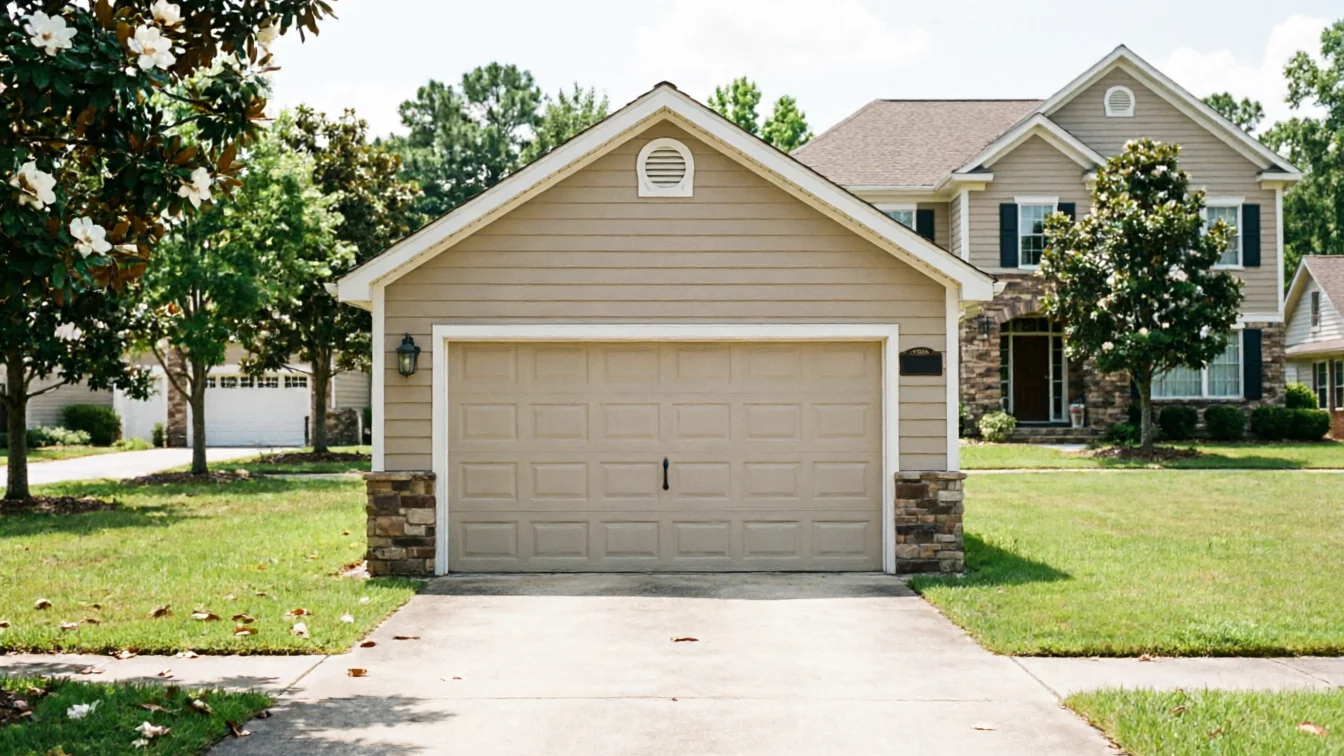
Most houses in the Gallatin area went up between 1959 and 2003, with the median build year sitting right around 1991. That matters because a door and opener don't age like a roof - they age like a machine, and a machine built to 1991 tolerances behaves differently than one built last year. Across the 14 named communities we work in, from Cottontown six miles out to Orlinda twenty miles up the road, the bulk of that housing stock dates to the 1980s and 90s specifically, not a wide scatter of decades. That means a lot of the doors we're called out to share the same bones: galvanized torsion springs sized for the lighter steel doors common in that era, openers with drive gears that were never meant to run thirty years straight, and track hardware installed before anyone was thinking about insulated panels. We're not guessing at what's behind your door when we show up - the neighborhood tells us most of it before we open the panel. The climate band here is cold-moderate, which is its own factor layered on top of that age. A spring or hinge that's marginal in October usually announces itself by January, not before.
Season by Season
Cold-moderate winters do a specific thing to a torsion spring: steel contracts, lubricant inside the coils thickens, and a spring that was already losing tension starts binding instead of flexing smoothly. That's the grinding or popping sound people hear on the first hard-freeze morning of the season, and it's rarely the spring failing right then - it's a spring that was already near the end, finally showing it. Heading into spring thaw, the opposite problem shows up: condensation inside an unheated garage settles on steel track and rollers overnight, and a door that ran quiet all winter starts squealing on the first warm, damp week. Summer brings the longest runs on the opener motor, especially on doors used several times a day, and that's when worn drive gears in an older chain-drive unit finally strip enough teeth to skip and clack instead of pulling smooth. None of this is exotic - it's steel, lubricant, and temperature doing what they always do. The point is that the season tells you roughly which part is under stress, which saves a service call from turning into a guessing exercise once someone's already standing in your driveway.
What Most People Get Wrong
The most common mistake we see is treating a noisy door like a lubrication problem when it's actually a tension problem. Spraying the rail or the hinges buys a week of quiet and nothing more if the real issue is a torsion spring that's lost coil tension after two or three decades of cold-moderate winters cycling it. The second mistake is assuming an opener that still runs must be fine - a drive gear can be half-stripped and still lift the door, just louder and slower every month, until it finally doesn't. Given the housing stock here mostly dates to the 1980s and 90s, a lot of these openers are well past any gear's reasonable service life even though nobody's replaced them. The third mistake, and this one's on us to be honest about: not every noisy door needs full replacement, and we don't push it when a spring swap or a gear kit solves it. If your panels are original to a 1980s build and still square and straight, there's usually no reason to replace the whole door over a worn part. Replacement makes sense when the panels are rusted through, warped, or the track is bent beyond adjustment - not just because the house is old.
The Problem
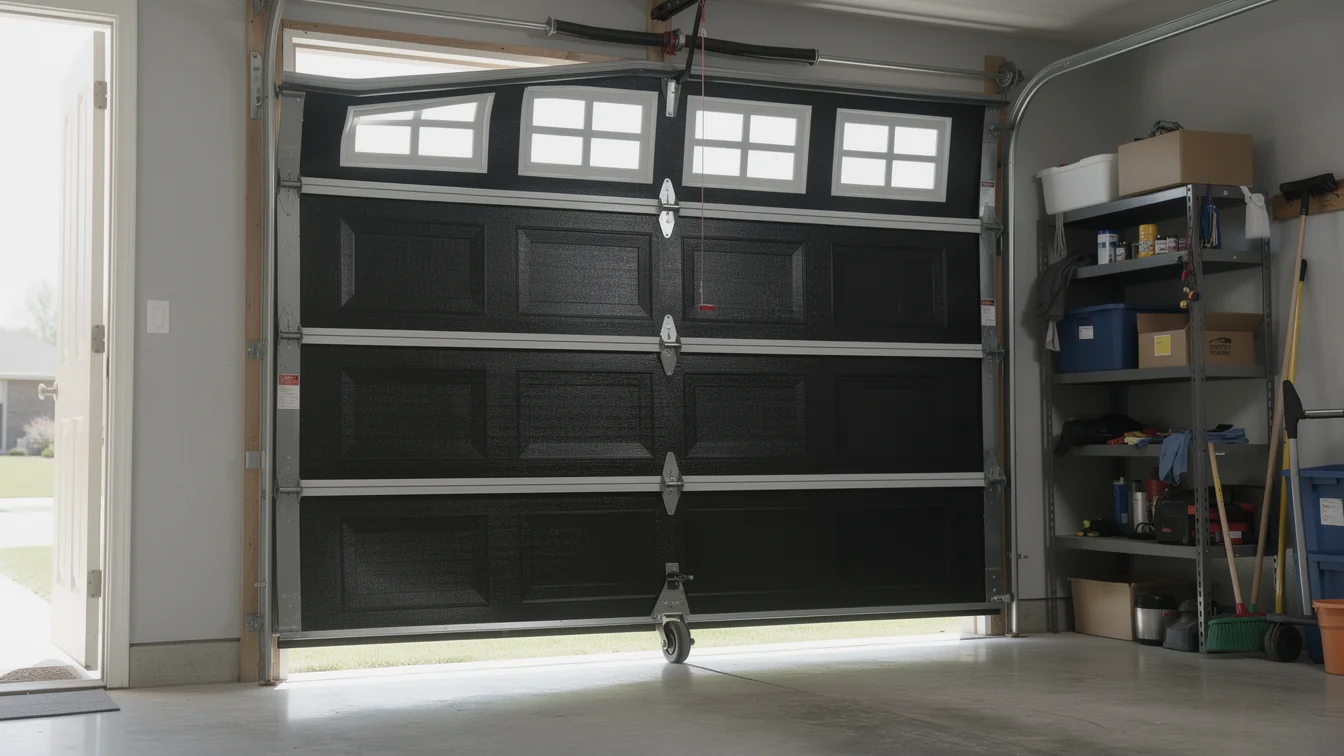
When a torsion spring is going, you'll hear a sharp bang on the first open of a cold morning, then a grinding or scraping as the door travels, because the spring is no longer carrying its share of the weight and the opener is straining. When a drive gear is stripped, the motor will run but the door lags behind or stutters - you'll hear the motor whine a half-second before the chain catches. Loose rollers in bent track sound different again: a rhythmic clack-clack-clack timed to each roller passing the same bad section. One limitation worth saying plainly - on heavier insulated doors installed later in that 1959-2003 window, an extension spring conversion isn't something we'll recommend even if it's cheaper, because it wasn't built for that load and it'll fail again within a season. With median household income in the area at $78,597, most owners here can cover a proper torsion spring replacement rather than patch a system that's fighting the wrong hardware.
Talk to a local pro
Garage door trouble in Gallatin?
Same-day service with honest, upfront quotes.