How Local Conditions Play In
Most houses in the Gallatin service area went up between 1959 and 2003, with the median build year sitting around 1991. That spread matters because it means a huge share of garage doors on the road right now are somewhere between 20 and 65 years old, built to standards and hardware that changed a lot over that stretch. A door installed in a subdivision from the early 90s boom is a different animal from one on a house built right at the tail end of the 1950s - different track width, different spring tension, sometimes a different door thickness entirely.
Across the fourteen named communities we work, from Cottontown six miles out to Orlinda twenty miles north, the bulk of what's standing dates to the 1980s and 90s. That's the era of steel sectional doors replacing the older wood panel styles, and it's also the era of openers that are long out of production. When a part fails on one of these doors, the question isn't just whether the door still works - it's whether anyone still makes the part it needs.
Gallatin sits in a cold-moderate climate band. That doesn't mean brutal winters, but it does mean enough freeze-thaw cycling each year to stiffen lubricant in torsion springs and tighten steel panels just enough to throw off balance on a door that was already close to the edge.
Season by Season
Cold-moderate doesn't mean mild. Through the winter months, steel panels contract and torsion springs that haven't been lubricated in years get stiff, which shows up as a door that groans, hesitates, or needs a shove partway through the cycle. That's usually the first sign a spring is near the end of its life, not a reason to call it dead on the spot.
Coming into spring and summer, humidity swings the other way. Original wood-trim doors - more common on the older end of Gallatin's 1959-2003 housing range - can swell at the seams, which binds against the track and strains the opener motor even when the spring and cables are fine. That's a different repair than a spring job, and it's worth knowing the difference before you spend money on the wrong fix.
Fall is usually the calm stretch, and it's the best time to catch a sagging door or a worn roller before winter stiffens everything up again. None of this is about a single big storm or event - it's the steady cycle of a cold-moderate climate working on hardware that, in a lot of cases, has already put in 25 or 30 years.
What Most People Get Wrong
The most common mistake is assuming age alone means replace. A door from the 1980s or 90s building boom that's been kept lubricated and never had its spring blown out can still run fine - the panels on a lot of that era steel are thicker than what gets sold new today. Age by itself isn't the deciding factor; what's actually failed is.
The second mistake runs the other way: patching a door that's past the point where patching makes sense. If the track is bent from an impact, if two or more panels are rusted through, or if the opener is an old chain-drive unit nobody stocks parts for anymore, a repair bill starts adding up to more than a straightforward swap would cost.
With 29,110 households and 16,187 owner-occupied houses across the service area, and a median household income of $78,597, most owners here are making a real budget call, not an emotional one. A $200-400 spring or cable repair on a door that's otherwise square and tracking straight is usually the right move. A full replacement only earns its cost when the frame, track, or opener are failing right alongside the spring.
The Problem
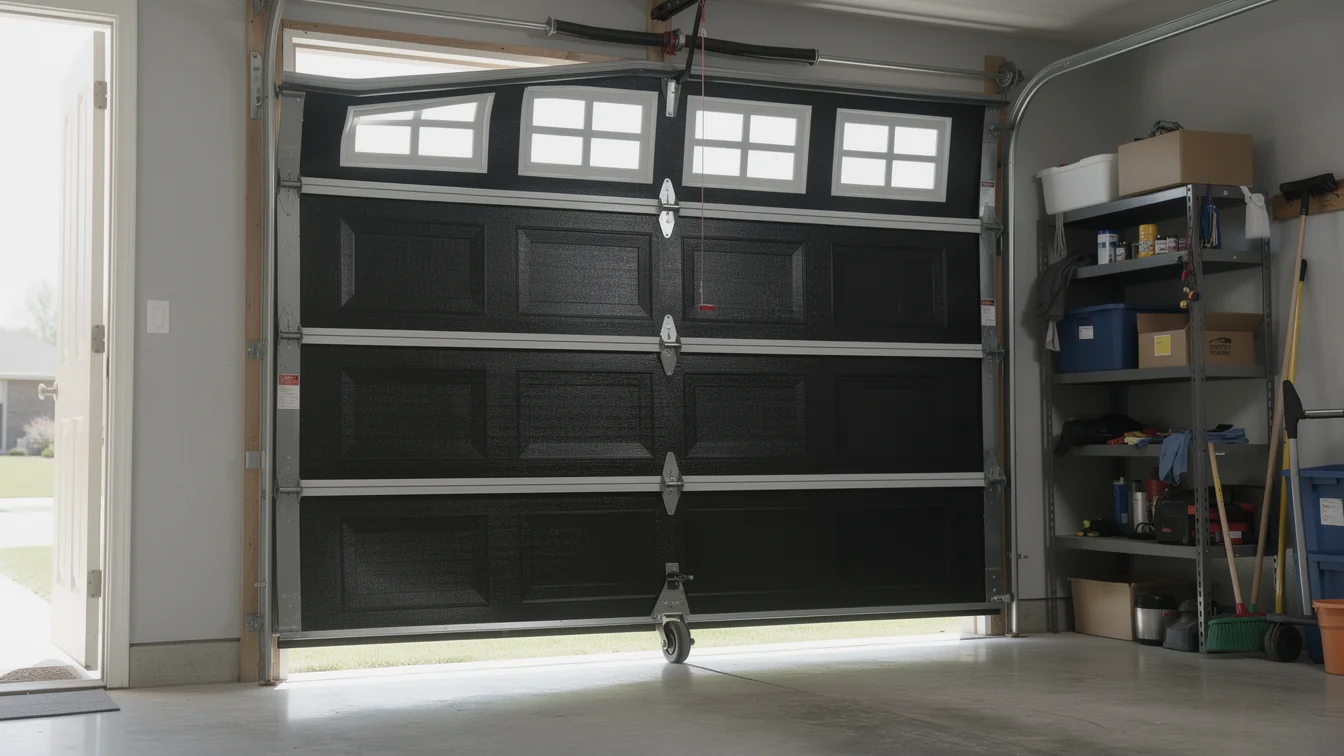
Here's the honest limitation: we can't always tell you over the phone whether your door is a repair or a replace. A door built in the 1980s or 90s boom that looks rough on the outside might have a perfectly sound torsion spring and track underneath, and a newer-looking door might be hiding a bent panel from a backed-into fender bump years ago that's thrown the whole thing out of square. It takes a look in person.
What we can say is this: a door installed anywhere in Gallatin's 1959-2003 building window is now old enough that its original opener, if it's still running, is likely out of production. That doesn't mean the opener needs to go - it means if it fails, the fix is a new unit, not a matched replacement part.
The real problem isn't the door's age. It's guessing. An old door that's been maintained can outlast a cheap new one installed wrong. The only way to know which side of that line your door is on is to have someone check the spring tension, the track alignment, and the panel condition before deciding anything.
Talk to a local pro
Garage door trouble in Gallatin?
Same-day service with honest, upfront quotes.