How Local Conditions Play In
Most of the houses we work on in Gallatin went up somewhere between 1959 and 2003, with the heaviest concentration from the 1980s and 90s, spread across the fourteen areas we run calls into - from Cottontown six miles out to Orlinda up at twenty. That build range matters more than people think when you're standing in front of a broken door. A door installed in 1985 runs different hardware than one from 2001: extension springs on older side tracks versus torsion springs on center-mounted shafts, chain-drive openers that have outlived two or three logic boards versus belt drives from the early 2000s.
Across the service area there are 29,110 households and 16,187 owner-occupied houses, which tells you something - a big share of the doors out there are original to construction or on their first replacement, not their third. We don't guess at what's behind your wall. We ask the build year and go from there, because the fix for a 1988 door and a 1999 door is rarely the same part, even on the same street.
Season by Season
Gallatin sits in a cold moderate climate band. That's not the same as a brutal winter, but it's enough freeze-thaw cycling every year to matter on a spring that's already twenty or thirty years into its working life. Steel contracts in the cold, and a torsion spring under tension contracts with it - the metal gets less forgiving right when the opener is asking the most of it on a short, cold morning. That's when a spring with hairline fatigue finally lets go, not usually in July.
Summer runs the opposite problem. Heat expands the same metal, softens old lubricant in the rollers and hinges, and on doors from the earlier end of our 1959-2003 range, loosens fasteners that have been through forty-plus seasons of that cycle. Neither extreme causes damage on its own - it's the repeating swing, year after year, on hardware that was never built to last forever, that does the work. If your door was installed in the 1980s or 90s, it has been through that cycle three or four decades running.
What Most People Get Wrong
The most common mistake we see in Gallatin is assuming a door is newer than it actually is. Given that median construction here lands around 1991, a lot of owners are living with the original door and opener and don't know it - nobody's handed them paperwork since the house sold twice. That changes the conversation. A spring call on a 1991 door isn't a five-minute swap if the drum, the cable, or the track has worn alongside it.
The second mistake is treating repair and replacement as the same decision regardless of cost. At a median household income of $78,597 across this area, most owners we talk to are weighing a spring repair in the low hundreds against a full door replacement well into four figures, and they want a straight answer on which one actually makes sense for their door's age - not just whichever we'd rather sell. On a door from the early end of our 1959-2003 range, replacement is often the better math. On something from the late 90s, a repair usually holds.
The Problem
Here's the part we're straight about: parts for doors built in the 1960s and 70s aren't sitting on a shelf. If your torsion hardware or an odd-width panel dates to the early end of what we see around here, sourcing the exact match can take longer than the repair itself, and sometimes a close match is the honest option instead. We'd rather tell you that up front than have you wait on a part that isn't coming.
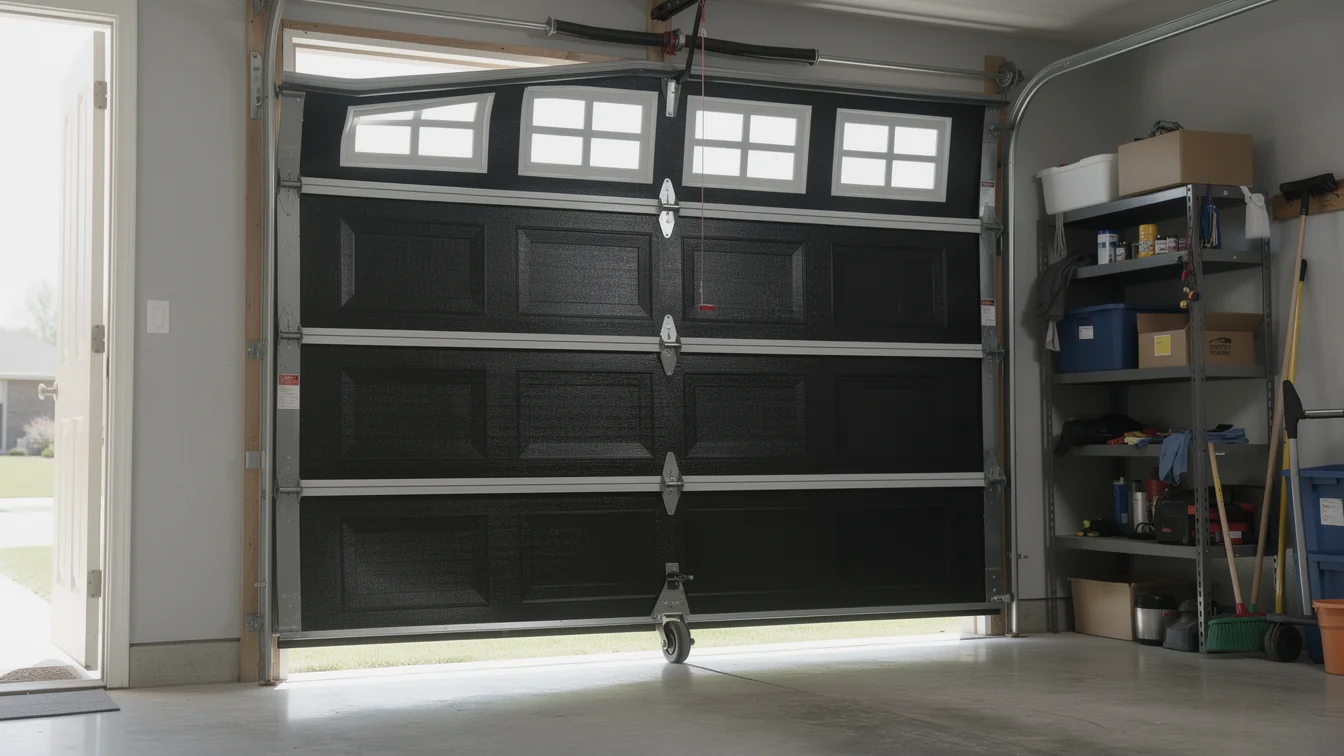
The broken spring itself is usually the easy part of the job - it's diagnosing what's underneath an older installation, built before current code assumptions, that takes the time. If you're in Gallatin or one of the areas nearby - Cottontown, Bethpage, White House, Goodlettsville, Millersville, and the rest out to Orlinda - the build year of your house is the first thing worth knowing before you call anyone. Get in touch if you want a straight read on what your door's age means for the fix.
Talk to a local pro
Garage door trouble in Gallatin?
Same-day service with honest, upfront quotes.