Openers with no response
Sometimes nothing happens at all - no light, no sound, no hum. Across the service area, most houses went up between 1959 and 2003, with the bulk of that stock dating to the 1980s and 90s across the 14 communities we work in.
Gallatin, TN
Opener repair for Gallatin homes built 1959-2003, where cold winters stress aging chain drives and circuit boards. Local diagnosis, straight talk on fix vs. replace.
Warning signs
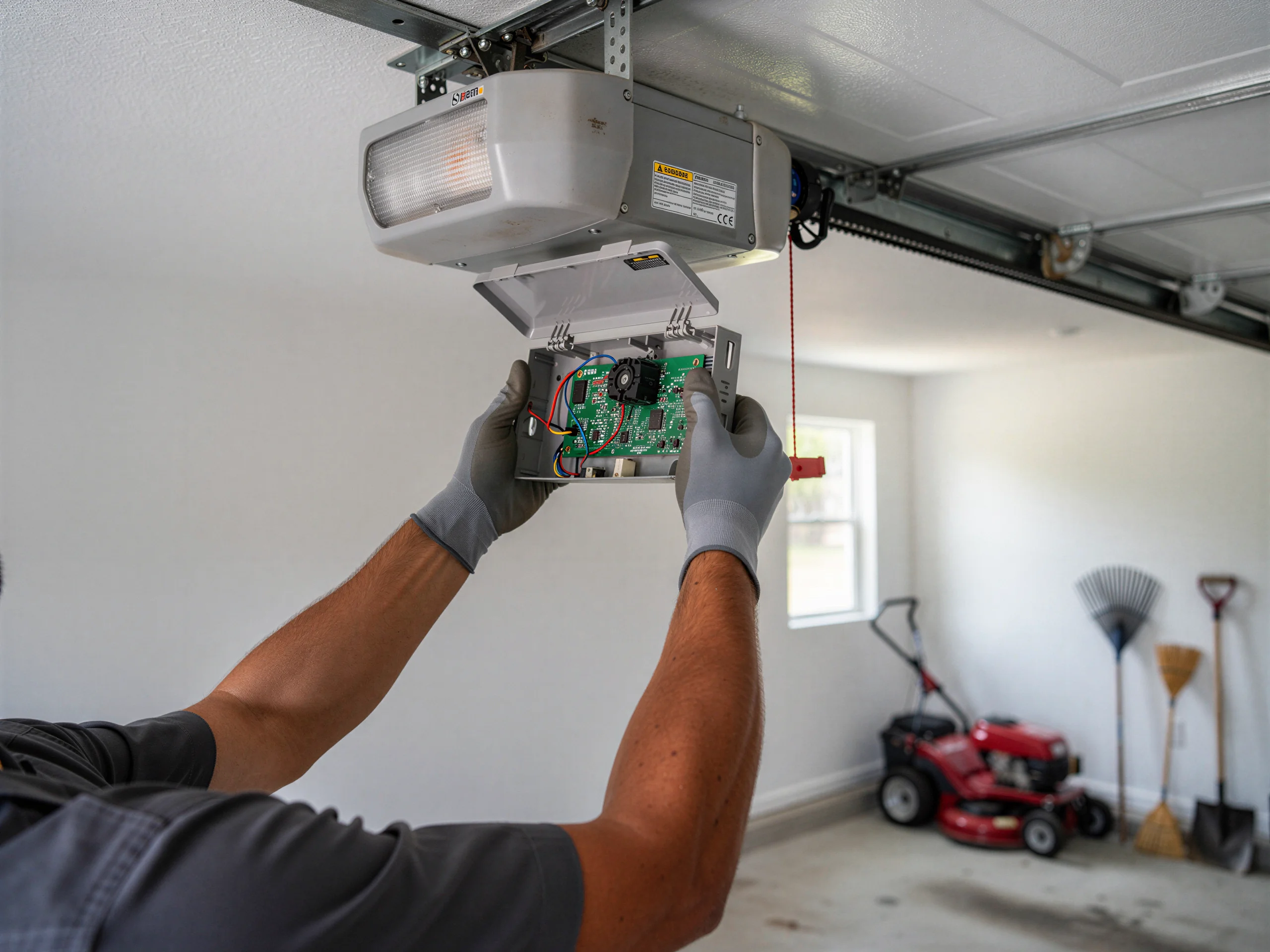
The call usually starts the same way: the opener hums but the door doesn't move, or it moves a few inches and reverses. Sometimes the remote works from the driveway but not from inside the house.
Sometimes nothing happens at all - no light, no sound, no hum. Across the service area, most houses went up between 1959 and 2003, with the bulk of that stock dating to the 1980s and 90s across the 14 communities we work in.
That means a lot of original or first-replacement openers are now 25 to 40 years old. The symptoms we see track that age: worn drive gears on chain-drive units, logic boards that have taken one too many power blips, and limit switches that have drifted out of calibration after decades of use.
On newer installs, the failure looks different - a safety sensor knocked out of alignment, or a learn button that won't hold a new remote code. Both show up as "the door won't close" calls, but the fix is nothing alike. Knowing the age and type of opener before we show up saves a trip and saves you a diagnostic fee you didn't need to pay twice.
Local causes
This region sits in a cold-moderate climate band, which means openers go through real seasonal swings - summer heat that softens grease and winter cold that stiffens it. A chain-drive unit built in the 1980s or 90s wasn't engineered with today's cold-rated lubricants or sealed circuit boards, so the yearly freeze-thaw cycle works on old solder joints and worn gear teeth in a way a newer unit shrugs off.
Houses from this build era also tend to have detached or side-entry garages wired on older circuits, which means the opener sometimes shares a line with other seasonal loads - space heaters in winter, window units in summer. That kind of voltage swing is hard on a 30-year-old transformer and board, and it's a big reason we see more opener calls in the coldest and hottest stretches of the year than in spring or fall.
With a median household income of $78,597 and roughly 16,187 owner-occupied houses across the area, most of these homes are solidly middle-class properties where people want a straight answer: is this worth fixing, or has the opener just reached the end of its service life. We give that answer before we start work, not after.
Our process
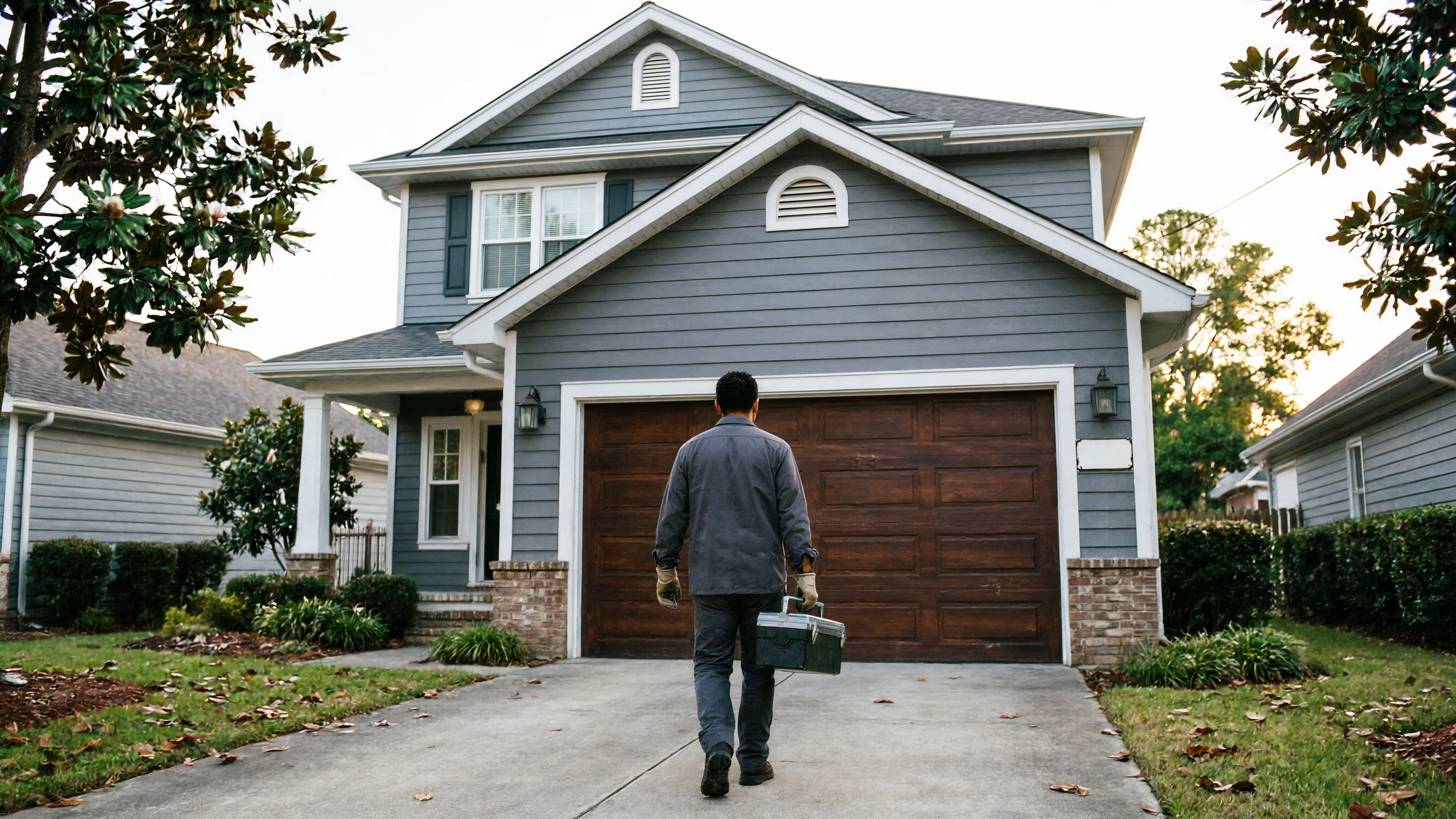
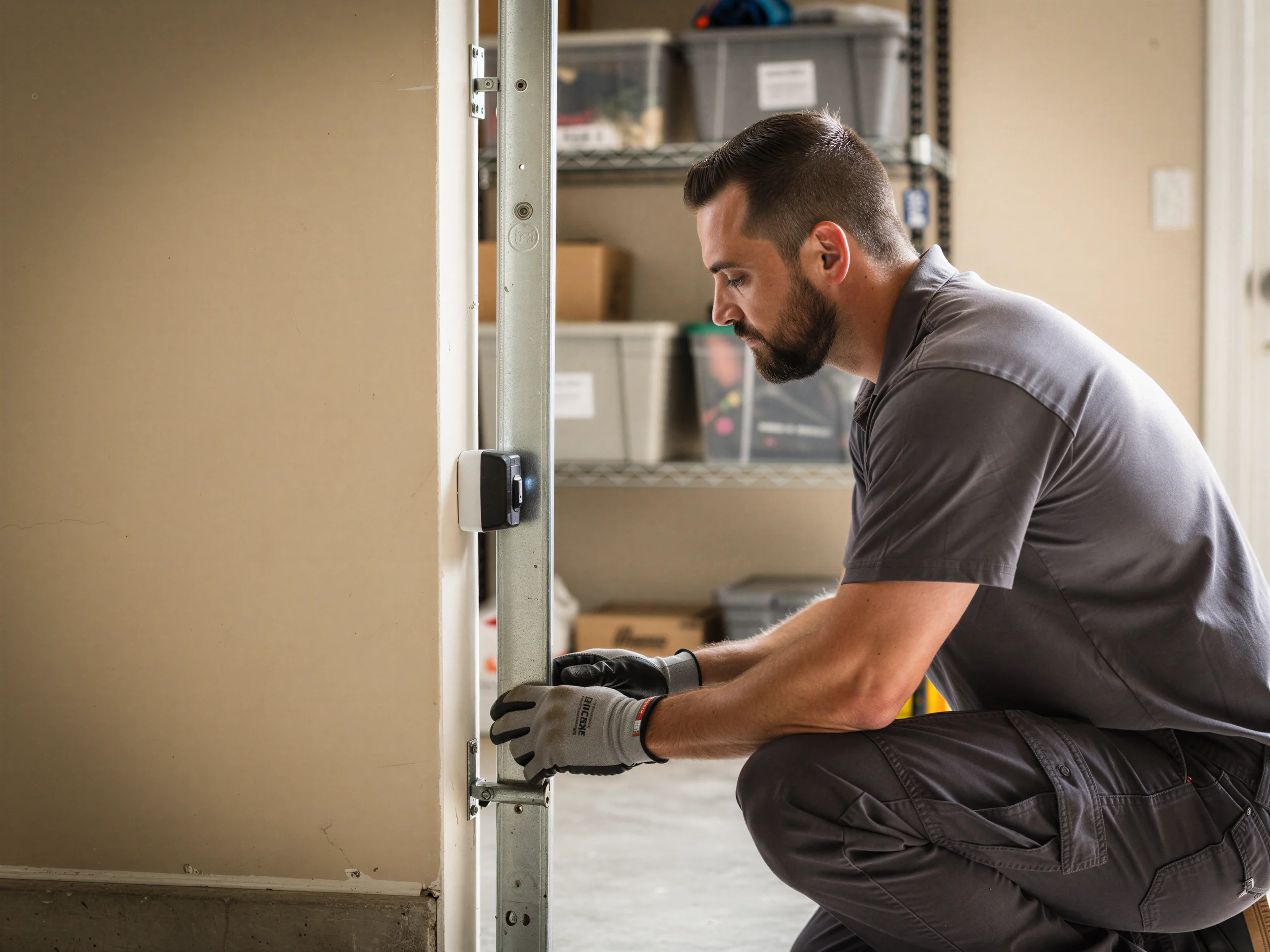
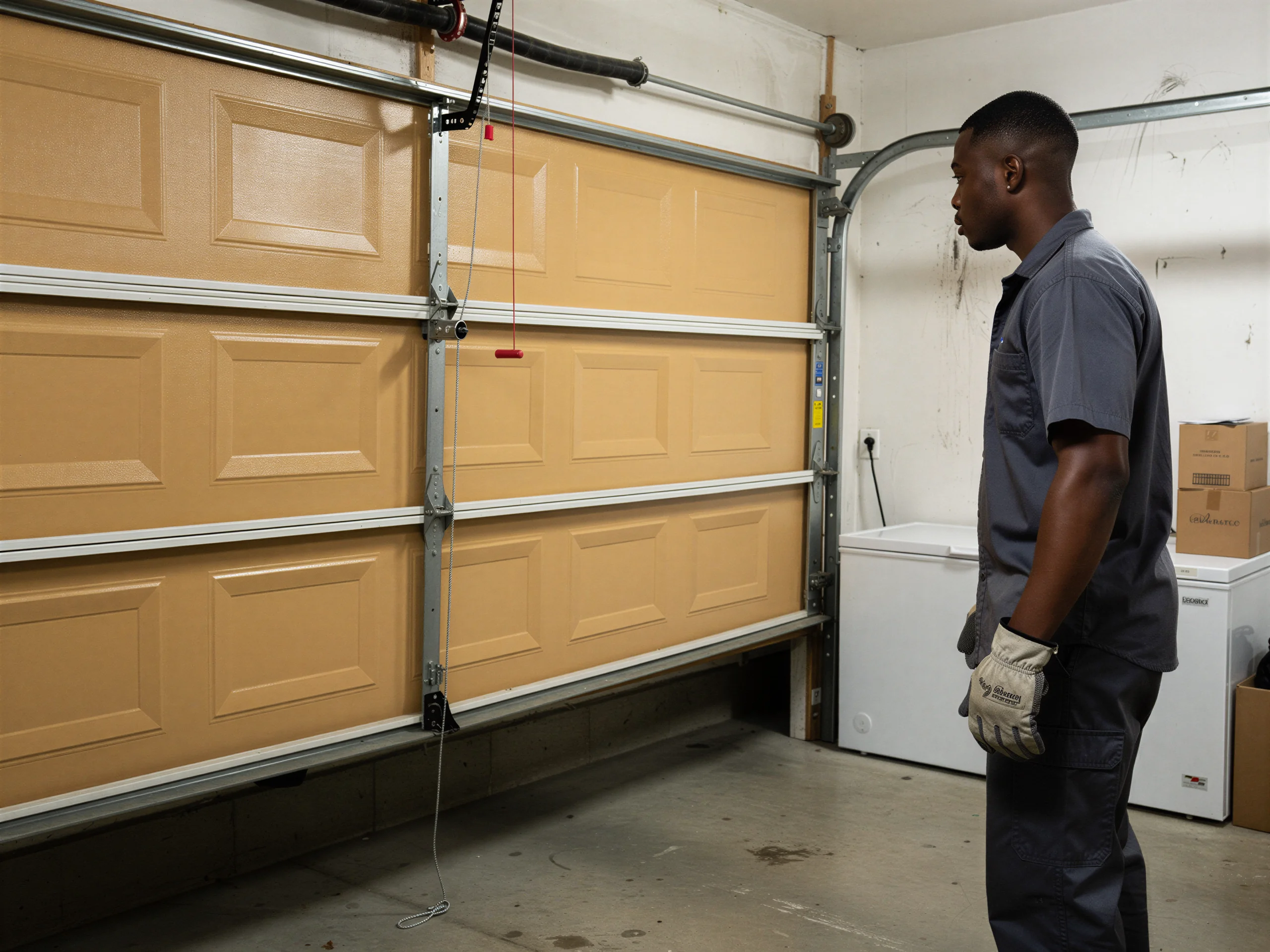
We start by testing the opener at the unit itself - power draw, travel limits, safety sensor alignment - before we touch the door or springs, because a door that's out of balance will burn out a perfectly good opener motor and mask the real problem.
If the motor and board test fine, the fix is usually a sensor realignment, a new logic board, or a drive gear and sprocket kit, and that's a same-visit repair in most cases. If the unit is original to a house built in the 1960s through 80s, we'll tell you plainly when the part numbers are discontinued or when a board costs most of what a new opener runs.
That's not an upsell - it's the math of fixing something built before today's parts supply existed. For houses in the 1980s-90s range, parts are still generally available and a straight repair is the more common outcome.
We carry common opener parts on the truck for the chain-drive and screw-drive units most common in this area's housing stock, which covers the bulk of calls without a return trip. Less common belt-drive and smart-opener boards sometimes need to be ordered, and we'll tell you that lead time up front rather than guess.
DIY or pro
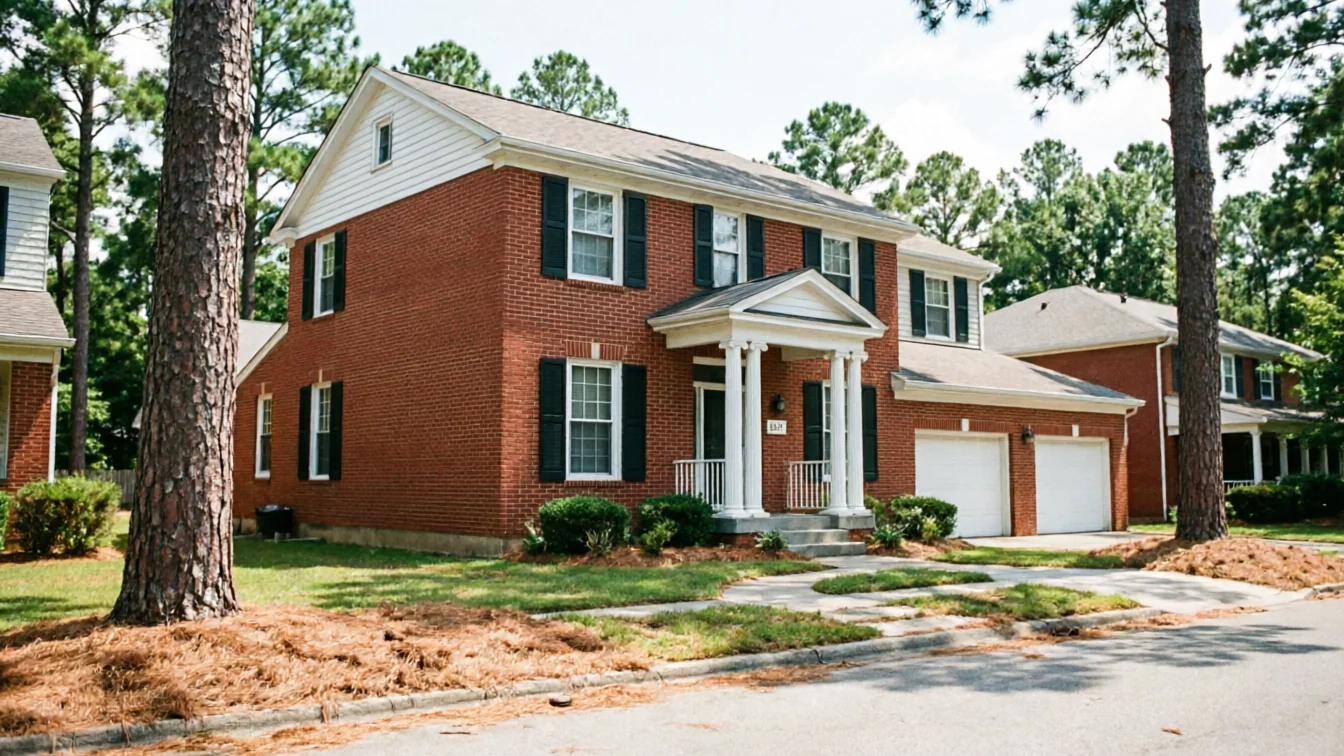
Some of this is homeowner-safe. Checking that the safety sensors are aligned and the lenses are clean, making sure nothing is blocking the sensor beam, and checking that the wall button and remote batteries are good - all of that takes five minutes and rules out the simplest causes before anyone calls a truck.
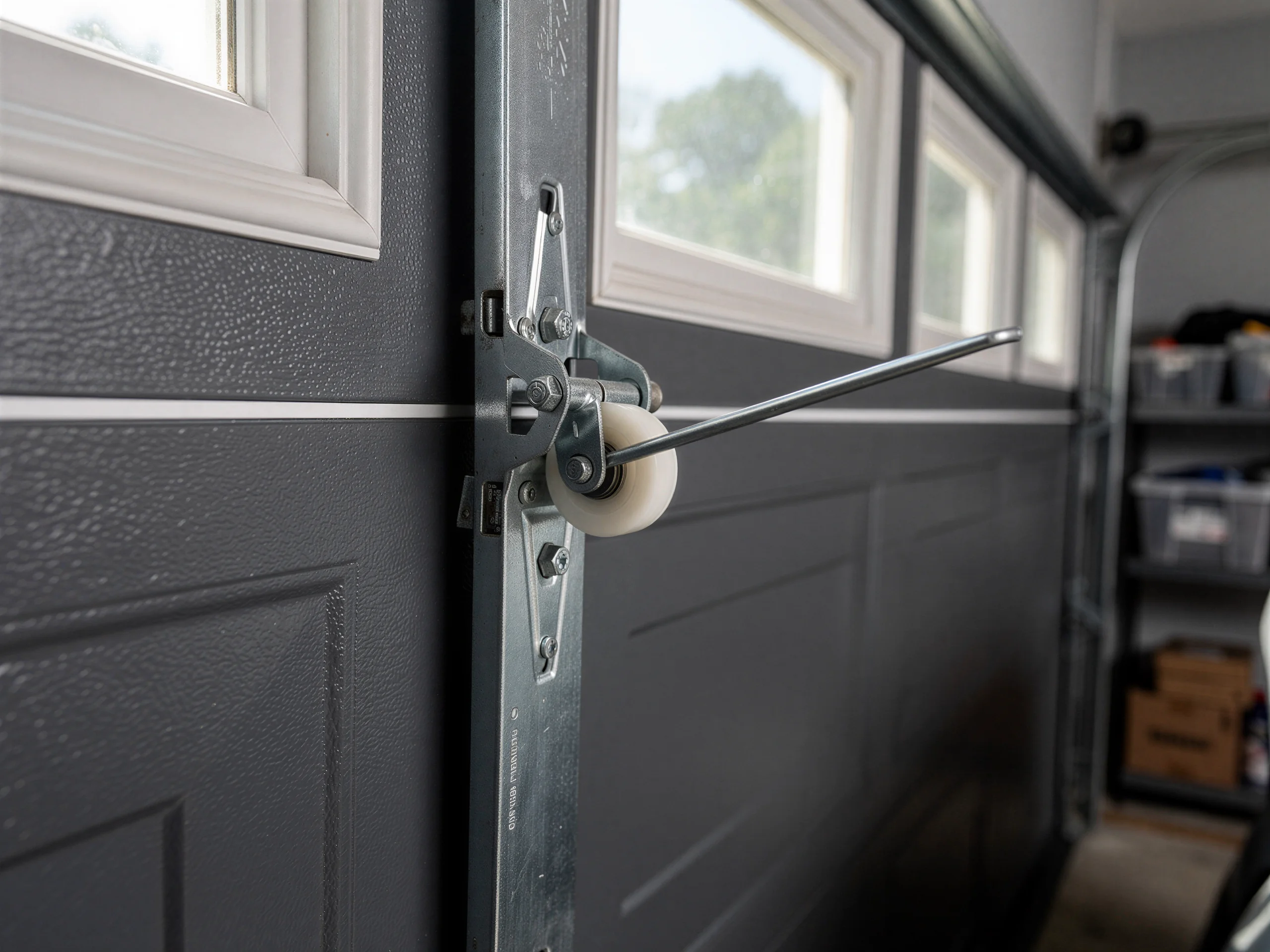
What we don't recommend touching yourself: anything involving the torsion spring, the high-tension cable near the opener rail, or opening the motor housing on a unit that's still under warranty, since that can void coverage you didn't know you had. If the opener trips the breaker repeatedly or you smell anything burning at the unit, stop and call - that's a wiring issue, not an adjustment.
One honest limit: if your opener predates the 1980s and uses a long-discontinued board, we may not be able to get a drop-in replacement part, and the honest fix at that point is a new operator rather than a repair. We'll tell you that during the visit rather than after we've billed for a part search that goes nowhere.
Questions
It depends more on parts availability than age alone. Most 1980s-90s units still have parts in supply, so repair makes sense. Units older than that, especially with discontinued boards, often cost nearly as much to fix as to replace - we'll tell you which category yours falls into before starting work.
Cold stiffens lubricant on gears and chains, and older transformers and boards handle voltage swings from shared winter circuits worse than newer sealed units. This region's cold-moderate climate means that seasonal stress repeats every year on aging equipment.
We carry common parts for the chain-drive and screw-drive openers most common in this area's housing stock, so most repairs happen in one visit. Less common belt-drive or smart-opener boards sometimes need ordering, and we'll give you a lead time estimate up front.
Yes - check sensor alignment, clean the lenses, make sure nothing blocks the beam, and swap the remote and wall button batteries. That resolves a good share of calls. Avoid opening the motor housing or touching the torsion spring yourself.
Explore more
Ready when you are
Gallatin Garage Door Pros repairs and installs garage doors, springs and openers in Gallatin, TN and the surrounding area.